The origin of the Swimmer Turbine
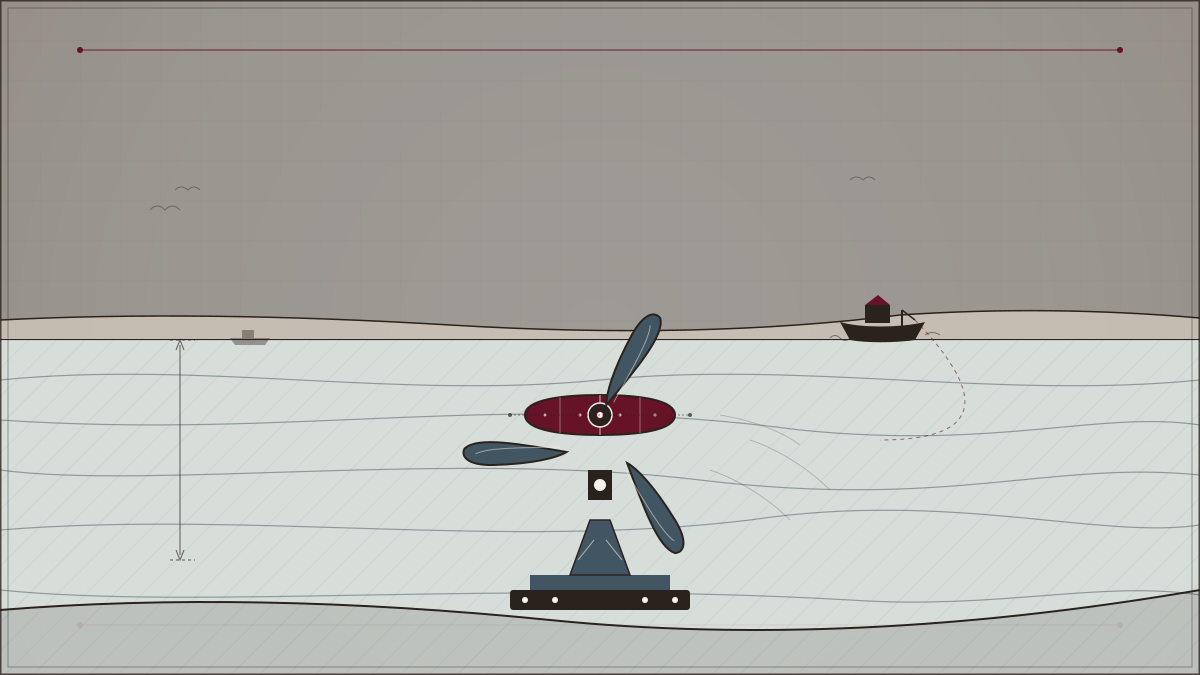
More than a decade ago, engineer David Mummery visualized a new type of small-scale tidal energy generator while lying in the fast-flowing rapids of a river in the Scottish Highlands. The idea eventually became the Swimmer Turbine, a 50kW tidal generator created by his company, Flex Marine Power.
Anchored to the sea floor and constructed from fiberglass and steel, the device remains invisible below the water’s surface. According to Mummery, a single unit can generate enough electricity to power about 30 homes. Early tests for the technology began in the early 2010s at a secret Highland location to keep the development discreet before large-scale energy costs surged in Britain.
Moving away from utility-scale marine projects
While Scotland has established a reputation as a center for marine power expertise with large-scale projects like Nova Innovation, MeyGen, and Orbital O2, Mummery noticed a disconnect between massive utility-scale installations and the local fishermen he met in coastal pubs. These large machines typically weigh hundreds of tonnes and require mainland shipping, heavy lifts, and flashy cranes.
In contrast, the Swimmer Turbine is ultra-compact. Mummery describes the assembly process similarly to an Ikea furniture kit, arriving in a shipping container with roughly 20 components that local workers can bolt together.
After initially working on major developments—including a secondment on the 180-metre-long Pelamis wave power project in Orkney—Mummery left large projects behind in 2011 to focus on his own concept. He operated out of temporary spaces before securing former shipyard sheds in Greenock through Inverclyde’s redevelopment authority, gaining direct access to the River Clyde for testing.
Testing and community deployment
Following successful trials on the island of Luing in 2015, Mummery collaborated with Queen’s University Belfast in 2020 to test equipment at Strangford Narrows in Northern Ireland. That proof-of-concept helped Flex Marine Power secure £968,000 from the UK government’s Energy Entrepreneurs Fund to develop a commercial model.
Last year, testing moved to the island of Islay, where local mariners and fishermen were taught to assemble and launch the device using their own tractors and slipways. Mummery plans to return to Islay next year to generate electricity for the island, aiming to equip coastal communities to utilize the power found in local tides without relying on corporate infrastructure.